Participant voice
Let the person affected shape spacing and equipment choices.
 MOTION MOSAICDANNEVIRKE
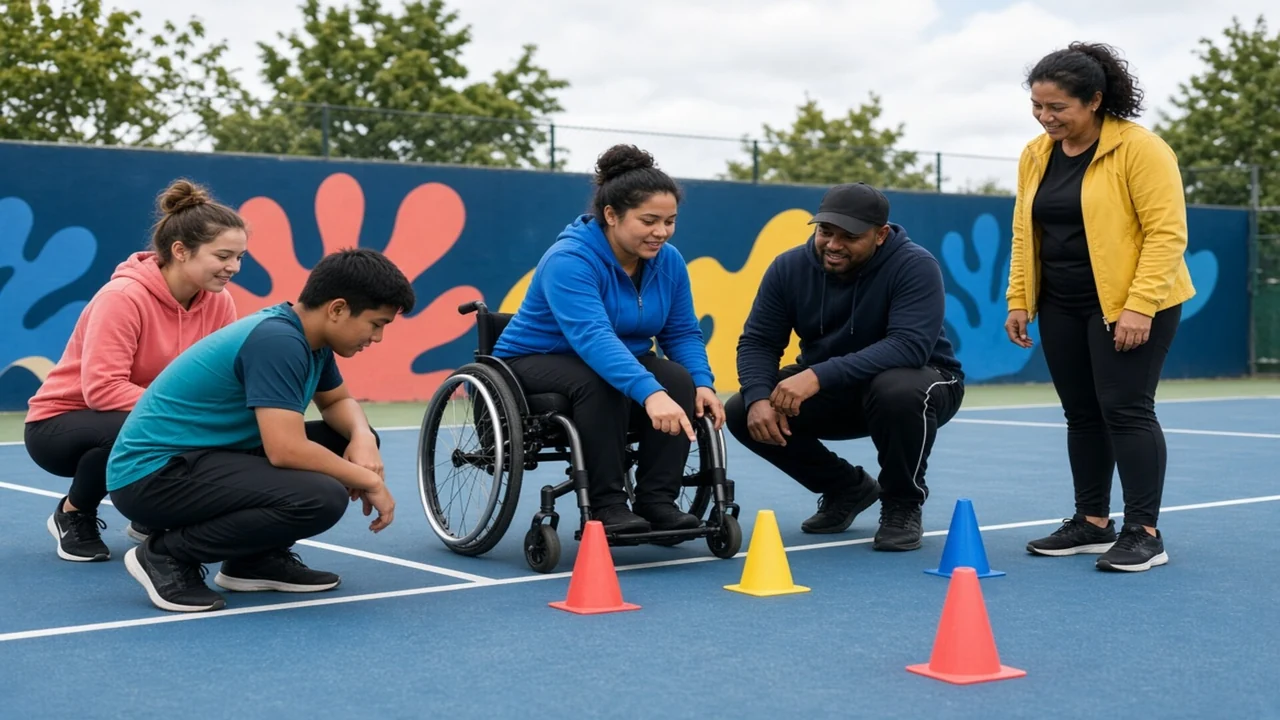
Ask, offer, adjust
Change the shared pattern without making one participant a separate or lesser version.
Pane 31–35
Ask whether more space, a slower example, another equipment option or a quieter visible edge would help. Do not request a diagnosis, medical history or public explanation.
Show an idea using movement, one plain-language cue and a blank colour marker. Repeat from another angle and allow processing time when noise, glare or crowd position hides the demonstration.
Let the person affected shape spacing and equipment choices.
Offer a low-traffic pause area that remains supervised and accessible.
Use gesture, speech and visual placement without information overload.
Build one shared pattern for seated, standing and different-paced participants.
Important boundary
An illustrated prompt cannot assess a real facility, provide specialist fitting or certify accessibility. Formal adjustments should be agreed with the participant, guardian where relevant, organiser and suitably qualified people.
Do not touch or move a mobility aid without permission. Preserve entrances, ramps, firm paths and turning room when laying out any activity.